Guide one
Pellet Types
An airgun pellet is a small, waisted projectile, usually made of lead or a lead-free alloy. The shape of its head, its weight and its calibre all change how it flies and what it is good for.
Why pellets are waisted
The classic “diabolo” pellet has a solid head, a narrow waist and a flared hollow skirt. The skirt seals the barrel and catches air like a shuttlecock, which keeps the pellet flying head first.
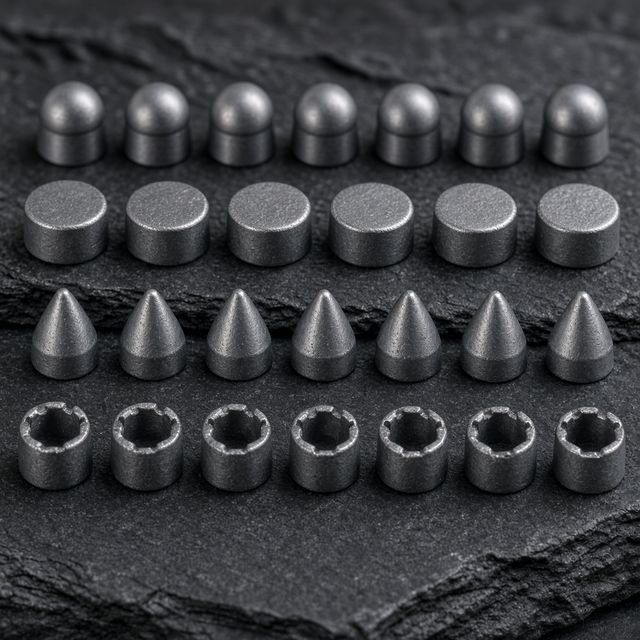
Head shapes at a glance
| Shape | How it behaves | Typical use |
|---|---|---|
| Wadcutter (flat) | Cuts a clean round hole; loses speed quickly at longer range | 10 m paper targets |
| Domed (round nose) | Holds speed well and flies predictably | All-round practice at most distances |
| Pointed | Often less consistent than domed pellets in the same gun | Experimenting |
| Hollow point | Cupped head; behaves much like a domed pellet on paper | Specialist use |
| Slug | Solid, bullet-like; made for high-power airguns | Mostly licensed guns |
Calibre and weight
The common calibres are .177 (4.5 mm), .22 (5.5 mm) and .25 (6.35 mm). Weight is given in grains. A lighter pellet leaves the barrel faster; a heavier one is slower but keeps its energy better. Every gun has its favourites, so it is normal to try a few tins before settling on one.
How to find the right pellet for your gun
- Start with a quality domed pellet and a quality wadcutter in your gun’s calibre.
- Shoot several five-shot groups with each from a steady rest at a fixed distance.
- Measure the groups. The tightest, most consistent groups win, whatever the packaging claims.
- Note the batch or tin details; quality can vary between batches.
Handling lead
Most pellets contain lead. Wash your hands after handling them, do not eat or drink while loading, and keep tins away from children. Lead-free pellets are available if you prefer to avoid lead.